
1 hr
Cornwall Seal Safari Boat Adventure
Speed along Cornwall's dramatic coast in search of grey seals, seabirds, and dolphins on this thrilling wildlife expedition
Reserve
Hand-picked by our editors — only the best 5 wildlife boat trips from 18 reviewed.
Verified partners for every tour, free cancellation where available, and instant confirmation on every booking.
1 hr
Speed along Cornwall's dramatic coast in search of grey seals, seabirds, and dolphins on this thrilling wildlife expedition
Reserve
2 hr
High-speed coastal expedition seeking dolphins, seals, and seabirds along Cornwall's dramatic shoreline
Reserve
2 hr
Explore Britain's dramatic southwestern tip by sea with expert wildlife guides on this unforgettable Atlantic adventure
ReservePrices from verified partners. Availability updates in real time at checkout. Free cancellation policies apply where shown.
The landmarks, rooms, and views travelers on this tour remember — all visible on a single visit.
They complement each other; most visitors who do both call the sanctuary more reliable for observing rescued marine mammals, while the open ocean offers a more dynamic experience. Choosing between these cornwall seal watching tours depends on whether you prioritize guaranteed visibility or a natural habitat excursion.
| Feature | Top pick Cornish Seal Sanctuary | Wild Cornish Coast Boat Tours |
|---|---|---|
Experience Type |
Rehabilitation centre and park | Coastal boat expedition |
Accessibility |
Wheelchair accessible pathways | Limited due to vessel access |
Wildlife Proximity |
High via viewing pools | Variable based on sightings |
Interaction Level |
Structured feeding presentations | Observation from distance |
Educational Focus |
Intensive marine conservation | Marine biology and local geography |
Ethical Considerations |
Strict rescue protocol | Non-intrusive wildlife viewing |
| See tickets → |
Verdict: If you seek guaranteed animal encounters and educational depth, secure your cornwall seal watching tickets for the sanctuary, whereas those preferring raw coastal scenery should choose the boat tour.
Choose your ticket, select your date, and reserve in under two minutes. Secure checkout handled by our verified partner.
Instant confirmation by email, with a mobile voucher you can save offline. No printing, no queuing at a collection desk.
Arrive at the entrance, show your voucher on your phone, and walk in. Most tickets include priority or skip-the-line access.
Practical details for your visit straight from our verified partners — hours, access, rules, and how to get there.
The Cornish Seal Sanctuary, Gweek, TR12 6UG
Follow signs for parking
Follow the A3083 or A394 towards Helston, then follow signs for Gweek.
Take local bus services to Helston, then a taxi to the sanctuary.
Casual outdoor attire is recommended for cornwall seal watching activities. Wear sturdy walking shoes as the sanctuary grounds include gravel paths and coastal terrain.
Standard backpacks are permitted on-site for those enjoying a cornwall seal watching tour. We reserve the right to inspect bags upon entry to The Cornish Seal Sanctuary.
Personal photography is encouraged during your cornwall seal watching experience. Please refrain from using flash photography near the seal pools to avoid disturbing the animals.
The Cornish Seal Sanctuary provides accessible pathways throughout the main viewing areas. Dedicated disabled parking is available near the entrance to ensure comfortable cornwall seal watching access.
Mobile phones are permitted for use while navigating the sanctuary. Please keep devices silenced during animal demonstrations to maintain a calm environment.
Families participating in cornwall seal watching will find dedicated play areas and educational exhibits. Pushchairs can be navigated across most of the sanctuary grounds.
The on-site cafe offers hot and cold meals for those visiting The Cornish Seal Sanctuary. Picnic areas are available for visitors bringing their own refreshments.
Only assistance dogs are permitted within the sanctuary grounds. Please do not leave pets unattended in vehicles parked at the attraction.
Visitors can learn about marine conservation while engaging in cornwall seal watching. The sanctuary operates as a rescue and rehabilitation center for injured wildlife.
Best time to go, insider tips, nearby landmarks, and the cancellation fine print — flip through to skim what matters to you.
How crowds, weather, and events shift across the year.
March to May offers mild weather for cornwall seal watching before the summer peak.
June to August is the busiest period with optimal sunshine for visiting The Cornish Seal Sanctuary.
September to November is ideal for spotting rehabilitated seals during their transition.
December to February provides a quieter environment for those seeking a peaceful cornwall seal watching visit.
Small details that turn a good visit into a great one.
Aim for a 10:00 arrival to maximize your time before the 15:00 cutoff for full exploration.
Check the daily board upon entry to sync your cornwall seal watching visit with feedings.
Wear sensible shoes because the sanctuary terrain involves gradients and natural paths.
Maintain distance from animal enclosures to ensure the welfare of the seals.
Remember that your 19.95 GBP ticket allows return visits for 12 months.
Non-bookable sights within a short walk — free to visit, easy to pair.
A beautiful tidal estuary offering scenic views and kayaking opportunities.
Historic satellite tracking facility with deep ties to telecommunications history.
Family theme park featuring an indoor Victorian village and historic exhibits.
Flexible, no hidden fees.
The admission fee of 19.95 GBP is non-refundable. Your purchase provides free return visits for 12 months from the date of initial entry.
Hand-picked options within walking distance — pick a district for vibe, or a specific hotel for convenience.
Charming holiday cottages and local bed and breakfasts.
Range of inns and guesthouses near the town center.
High-end coastal hotels with extensive spa facilities.
The Cornish coastline hosts one of Britain's largest Atlantic grey seal populations, with over 400 individuals recorded at breeding sites between Land's End and the Lizard Peninsula. These colonies, established on isolated rock stacks and tidal skerries, peak in autumn when females haul out to give birth, but resident adults remain visible year-round — bulls weighing 300 kilograms surface within metres of tour boats between April and September. Cornwall seal watching centres on three departure zones. Gweek's Helford River provides sheltered access to the Cornish Seal Sanctuary, a rescue facility founded in 1958 that rehabilitates 40–60 injured pups annually before releasing them into Falmouth Bay. Padstow's north coast harbours support rigid inflatable boat safaris to Seal Island, a granite outcrop two miles offshore where breeding females form dense aggregations each October. Penzance operators run longer voyages west past St Michael's Mount toward the Logan Rock haul-out, where Atlantic swells bring nutrient upwellings that attract harbour porpoises and basking sharks alongside seal colonies. The grey seal (Halichoerus grypus) is Britain's largest breeding carnivore, distinguished from common seals by its elongated snout and spaced nostrils. Adults dive to 70 metres pursuing pollock and wrasse, surfacing every eight minutes during foraging runs that extend three miles from shore. Pups are born with white lanugo fur that moults within three weeks, replaced by waterproof pelage before they enter the sea. Conservation protections introduced in 1970 ended centuries of culling, allowing Cornish populations to recover from fewer than 50 breeding pairs to current census figures exceeding 200 pupping females. Modern wildlife boat operators follow Marine Management Organisation guidelines, maintaining 100-metre exclusion zones around haul-out sites and cutting engines when seals approach voluntarily. RIB safaris launched from Padstow cover 12 nautical miles in 90-minute circuits, while Penzance's displacement-hull cruises offer two-hour itineraries with onboard naturalist commentary. Spring and summer provide calm seas and extended daylight, though autumn breeding season brings the highest concentration of visible animals.
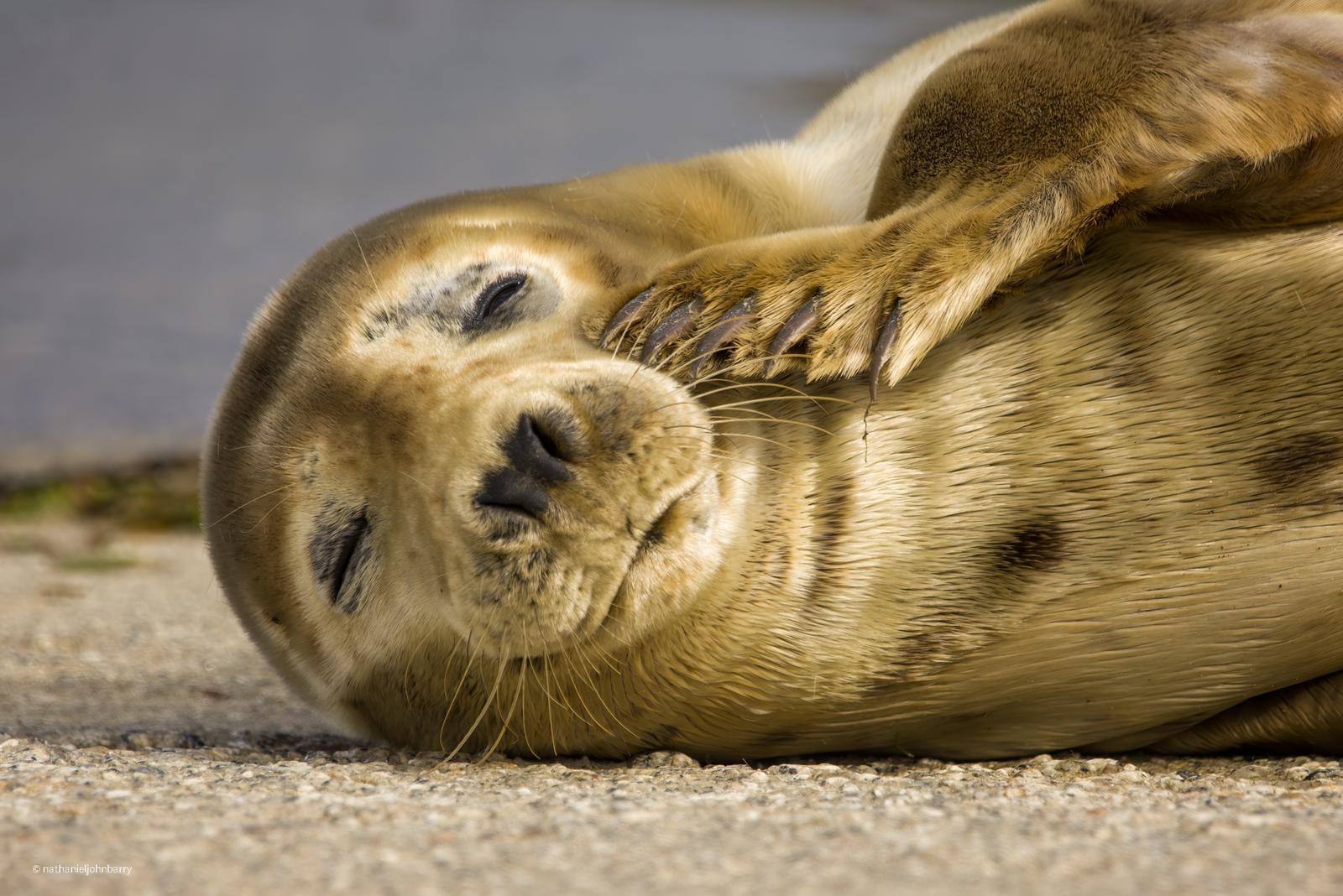
"Atlantic grey seals, weighing up to 300 kilograms, surface within metres of tour boats between April and September."
A step-by-step walkthrough of the visit — what you'll see, how long each stage takes, and the details that matter.
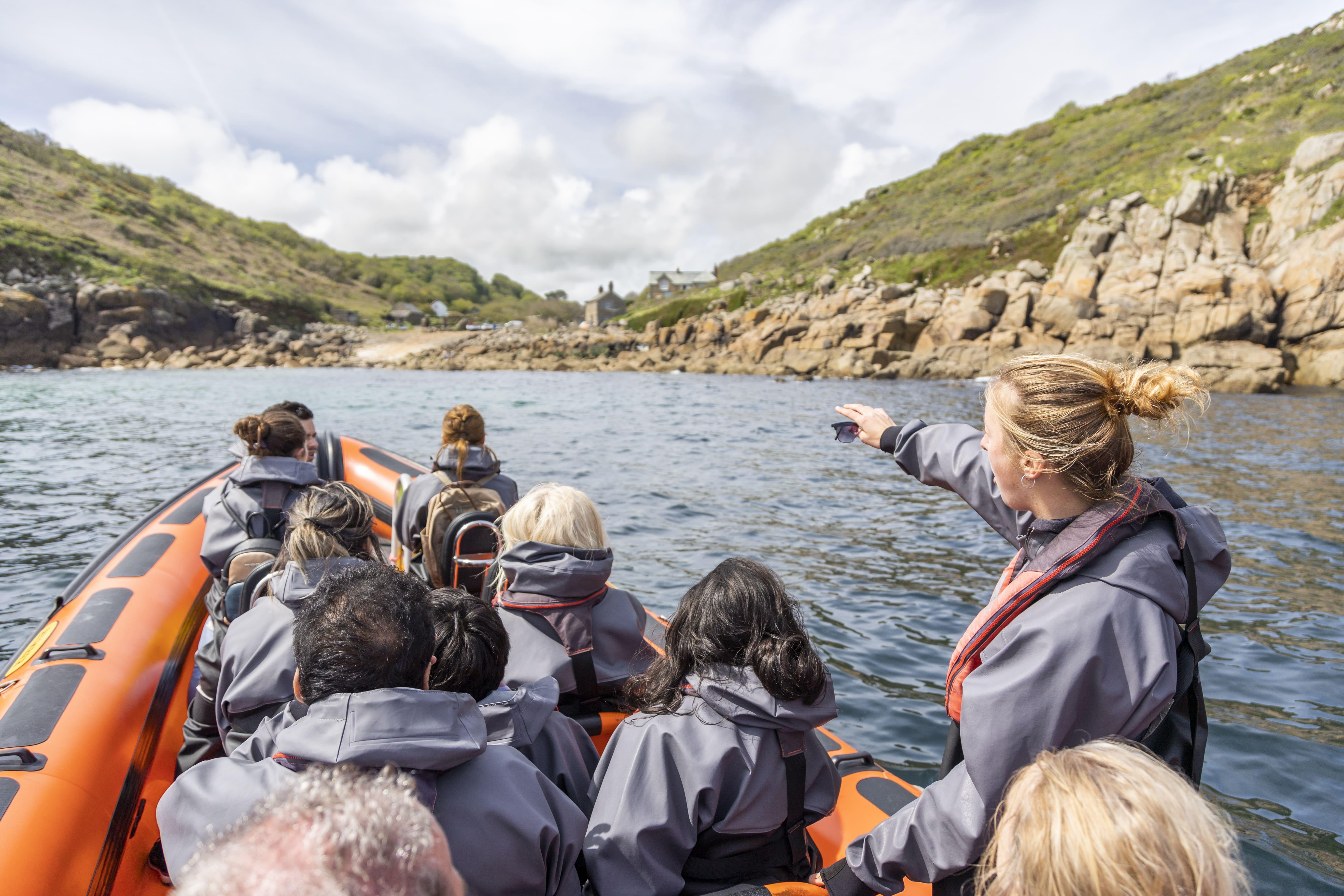
You board a rigid inflatable at Padstow harbour 30 minutes before departure, fitted with weatherproof gear and a flotation vest. The skipper briefs the group on hand signals and camera techniques as the RIB clears the Camel estuary, accelerating past Stepper Point into open Atlantic swells. Within 15 minutes you sight the first grey seals — three adults hauled out on barnacled granite, their mottled pelts drying in morning sun. The boat cuts its engine 100 metres offshore. A bull seal surfaces starboard, exhaling a plume of mist before diving beneath the hull. You track his silhouette through green water as he circles twice, curious, before rejoining the haul-out group. The skipper repositions downwind, allowing the colony's scent — fish oil and kelp rot — to reach you before the engine noise disturbs their rest. Younger seals slip into the water, approaching within 10 metres to investigate the boat's white tubes. On the return leg you pass razorbill colonies nesting on cliff ledges and a lone harbour porpoise breaking the surface in pursuit of mackerel shoals. The entire circuit covers 12 nautical miles, landing back at Padstow 90 minutes after departure. Your images capture whiskers, nose scars and the liquid black eyes of animals that spend 90 percent of their lives submerged.
The sanctuary is open daily from 10:00–17:00 for your cornwall seal watching visit.
You may stay until closing at 17:00, but we recommend arriving between 10:00–15:00 for the best experience.
While walk-ins are possible, securing your cornwall seal watching tickets online ensures faster entry.
Yes, families are welcome and will enjoy the educational displays at The Cornish Seal Sanctuary.
Yes, a cafe is available on-site for meals and drinks during your cornwall seal watching day.
The sanctuary is fully accessible, making it easy for all guests to enjoy cornwall seal watching.
The sanctuary is located at Gweek, near Helston; public transport or private vehicle are the best methods.
Bring comfortable walking shoes, a waterproof jacket, and your camera for capturing your cornwall seal watching tour.
Yes, personal photography is permitted, though please avoid flash to protect the animals during cornwall seal watching.
No, only assistance dogs are permitted inside the sanctuary for the safety of the seals.